Is Walking Enough? Why Women Need Strength Training for Heart Health Too
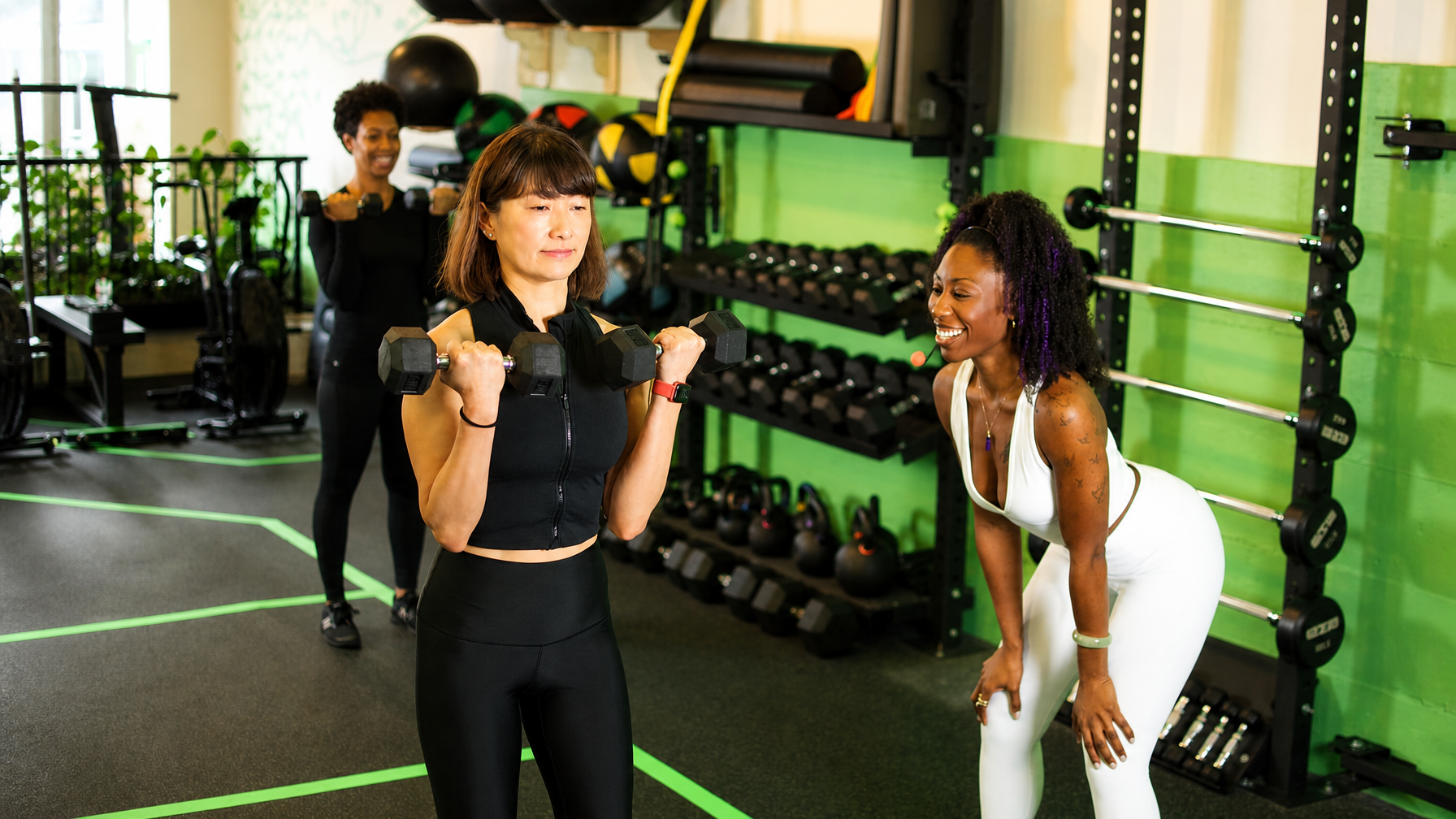
San Francisco makes it easy to count walking as exercise. We walk to BART, climb hills, carry groceries home, and take the stairs because the elevator is taking too long. All of that movement matters.
But if walking is the only exercise you do, one important piece may be missing: strength training.
Most women know that lifting weights can build muscle and protect bone. Its role in heart health gets much less attention. New research focused specifically on women gives us another reason to take it seriously.
What the New Research Found
A 2026 study in the Journal of the American College of Cardiology followed more than 117,000 women for an average of 14.5 years. Researchers looked at resistance training, aerobic activity, sedentary television time, and major cardiovascular events.
Women who reported two or more hours of resistance training per week had a 20 percent lower risk of major cardiovascular disease than women who reported none. They also had a 44 percent lower risk of heart attack. The study did not find the same association with stroke.
That does not mean lifting weights guarantees that you will avoid heart disease. This was an observational study, so it found an association rather than proving cause and effect. The researchers also relied on self-reported exercise, and the participants were not fully representative of all women.
Still, the overall pattern was notable. The lowest cardiovascular risk appeared among women who combined resistance training with aerobic activity and less sedentary time.
In other words, this is not a case of weights versus cardio. Your heart appears to benefit from both.
Why Walking Still Counts
Walking remains one of the simplest ways to support cardiovascular health. A brisk walk raises your heart rate, requires no special equipment, and fits naturally into city life.
Federal physical activity guidelines recommend that adults get at least 150 minutes of moderate-intensity aerobic activity each week, or 75 minutes of vigorous activity. They also recommend muscle-strengthening activity involving the major muscle groups on at least two days per week.
Walking can help you meet the aerobic part of that recommendation. It usually does not provide enough resistance to train your chest, back, shoulders, arms, hips, and legs through a useful range of motion.
The exception is walking with a specific strength demand, such as carrying a challenging load or climbing steep hills. Even then, you are unlikely to train your whole body evenly. San Francisco hills can make your legs work, but they are not doing much for your upper-body strength.
What Counts as Strength Training?
Strength training does not have to mean lifting the heaviest weight in the gym. It means asking your muscles to work against resistance.
That resistance can come from:
● Dumbbells or kettlebells
● Weight machines or a Smith machine
● Resistance bands
● Suspension equipment such as TRX
● Your own body weight
A balanced session might include a squat or lunge, a hip hinge, a push, a pull, and a core exercise. The exact movements depend on your experience, mobility, health history, and goals.
The weight should feel challenging enough that the final repetitions require focus, while still allowing you to maintain good form. If every set feels effortless, your body has little reason to adapt. If your technique falls apart, the resistance is too high or the set has gone on too long.
You Do Not Need Two-Hour Workouts
The women in the highest category in the 2026 study reported at least two hours of resistance training per week. That is a weekly total, not a recommendation to spend two hours lifting at once.
The study also used one hour per week, or roughly two 30-minute sessions, as the threshold for meeting the resistance-training recommendation in its combined analysis. Current federal guidance focuses on training the major muscle groups at least twice per week rather than prescribing a specific number of lifting minutes.
For many women, two or three focused sessions fit better than one long workout. A practical week could look like this:
● Two full-body strength sessions of 30 to 45 minutes
● Brisk walking, cycling, running, or other aerobic activity on several days
● Short movement breaks when work keeps you sitting for long periods
You do not need a complicated split routine unless you want one. A simple, repeatable plan that trains your whole body is enough to begin.
If You Are Starting from Zero
Start with movements you can perform confidently and a schedule you can maintain. Two sessions per week is a reasonable goal for many beginners.
Focus first on learning the exercises. Add weight or repetitions gradually as they become easier. Muscle soreness is not the measure of a successful workout, and you do not need to leave the gym exhausted for strength training to count.
If you have cardiovascular disease, uncontrolled high blood pressure, recent surgery, or symptoms such as chest pain, fainting, or unusual shortness of breath, talk with your healthcare provider before beginning or intensifying your workouts.
Build the Combination Your Body Needs
Walking is good exercise. Keep doing it. Just do not ask it to accomplish every part of your fitness plan.
Aerobic activity supports your heart and lungs. Resistance training strengthens your muscles and bones, and growing evidence suggests it may add meaningful cardiovascular benefits for women. Less sitting matters too.
You do not have to choose one. The better plan is to combine them in a way that works in your actual life.
If you want help turning that advice into a clear strength program, meet one of Eden Fitness Studio's female personal trainers. She can help you choose the right exercises, learn proper form, and build a plan that complements the walking or cardio you already do.
This article is for general information and does not replace medical advice. Speak with your healthcare provider about exercise recommendations that are appropriate for your health history. Read our full Terms & Conditions.